
The Incubation, Downstreaming, and Commercialization Unit (IHK) of the Faculty of Agricultural Industrial Technology (FTIP), Universitas Padjadjaran, together with BRI Peduli and the BRI Research Institute, held an Empowerment Program for Former Indonesian Migrant Workers (PMI) in Cirebon Regency on Thursday (6/11). This program is part of an effort to encourage community economic independence by strengthening the entrepreneurial capacity of former migrants who have returned to their home regions.
The activity, held in collaboration with the Cirebon Regency Manpower Office, was attended by 60 participants from six sub-districts. Through business training and mentoring, participants were equipped with the skills to build and develop productive, independent, and sustainable businesses.
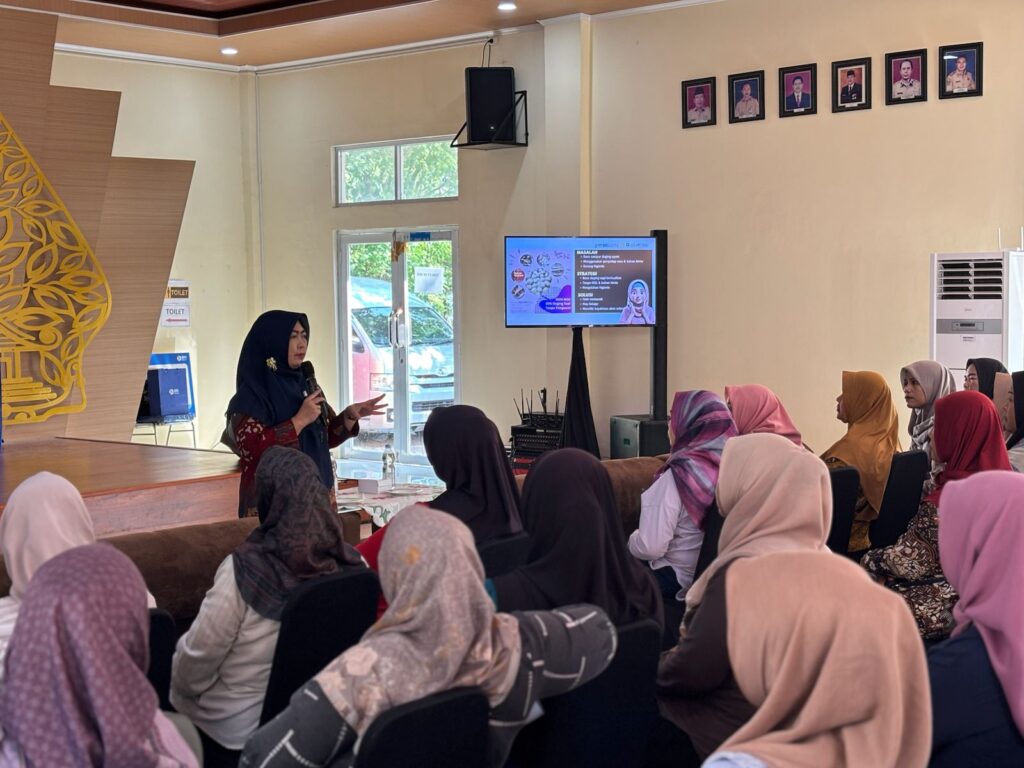
Sub Branch Office Head of BRI, Wahyu Adi Tyahyanto, explained that this program is a form of BRI’s commitment to supporting the improvement of community welfare through collaboration with universities and local governments.
According to him, Cirebon Regency was chosen as the program location because it has a significant number of former migrant workers and local economic potential that can be further developed. Through synergy with IHK FTIP Unpad, former migrants are expected to be able to transform their experiences into businesses that provide economic added value for their families and the surrounding environment.
Head of the IHK Unit at FTIP Unpad, Dr. In-In Hanidah, stated that the empowerment of former migrants focuses not only on improving individual skills but also on building an entrepreneurial ecosystem capable of growing sustainably.
“This program is expected to help former migrants remain productive and empowered after returning to their home regions. We also encourage the formation of a business ecosystem that allows participants to learn from each other, collaborate, and develop their businesses together,” she said.
As a follow-up to the program, IHK FTIP Unpad plans to build a marketing center that can evolve into a business mini-incubator for former migrants. The existence of this center is expected to become a collaborative space to strengthen business networks while increasing market access for products generated by the participants.
In this activity, participants received various materials ranging from strengthening the entrepreneurial mindset, product and market validation, to financial literacy as preparation for managing a business. Additionally, participants also attended product innovation practice sessions with business owners from Daviena Cake and Cookies, who provided training in making pastries and decorating birthday cakes as alternative skill-based business opportunities.
As a business incubator focusing on MSME development and innovation downstreaming, IHK FTIP Unpad applies an intensive peer-to-peer training and mentoring approach for two months. This method is designed to help former PMI transform into business actors capable of creating sustainable economic added value.
Head of the Cirebon Regency Manpower Office, Novi Hendrianto, S.STP., M.Si., appreciated the collaboration between BRI Peduli, BRI Research Institute, and IHK FTIP Unpad in supporting the capacity building of former migrants in his region.
He hoped that the skills and experience gained by migrant workers while working abroad could be optimized into businesses capable of creating new jobs and improving the welfare of families and the community.
This empowerment program demonstrates that collaboration between universities, the banking sector, and local governments can produce a real impact on community economic development. Through strengthening entrepreneurship and sustainable mentoring, Unpad continues to encourage the emergence of independent business actors capable of contributing to local economic development while strengthening the social resilience of the community.
This activity also supports the implementation of the Sustainable Development Goals (SDGs), particularly SDG 1 (No Poverty), SDG 8 (Decent Work and Economic Growth), SDG 10 (Reduced Inequalities), and SDG 17 (Partnerships for the Goals). Through the active role of universities in community empowerment, IHK FTIP Unpad is committed to encouraging the creation of an inclusive, sustainable entrepreneurial ecosystem capable of providing real benefits for improving community welfare.