
Agricultural Engineering Undergraduate Program

The Agricultural Engineering Study Program implements a curriculum that can normally be completed in 8 semesters or a minimum of 7 semesters, with a credit load of 144 SKS, consisting of compulsory courses (W), compulsory laboratory courses (L), and elective courses (P). Compulsory laboratory courses are determined by each student’s laboratory choice, and these courses can be elective courses for students in other laboratories. The distribution of courses in each semester, and the courses offered by the Agricultural Engineering Study Program, refer to the currently applicable curriculum. The list of these courses is presented in the table below:

SEMESTER 1
No.SemesterW/L/PCodeCourse NameCredits
11WUNX01-001Religion2
21WUNX01-002Pancasila2
31WUNX01-003Civics2
41WUNX01-004Indonesian Language2
51WUNX01-006Creativity and Entrepreneurship3
61WN10N1110Introduction to Agroindustry2
71WN10A221101Physics3
81WN10A221102Chemistry3
91WN10A221103Basic Mathematics2
Total SKS Semester 123
SEMESTER 2
No.SemesterW/L/PCodeCourse NameCredits
12WN10A221201Calculus 12
22WN10A221202Fluid Mechanics3
32WN10A221203Engineering Mechanics3
42WN10A221204Statistics3
52WN10A221205Biology2
62WN10A221206Engineering Drawing3
72WN10A221207Computer Programming3
82WN10A221208Agricultural and Biosystems Science2
Total SKS Semester 221
SEMESTER 3
No.SemesterW/L/PCodeCourse NameCredits
13WN10A222101Calculus II2
23WN10A222102Thermodynamics2
33WN10A222103Heat Transfer2
43WN10A222104Engineering Hydrology3
53WN10A222105Energy and Electricity3
63WN10A222106Engineering Materials Science2
73WN10A222107Strength of Materials2
83WN10A222108Characteristics of Agricultural Products3
93WN10A222109Soil Mechanics Physics2
Total SKS Semester 321
SEMESTER 4
No.SemesterW/L/PCodeCourse NameCredits
14WN10A222201Engineering Mathematics3
24WN10A222202Engineering Economics3
34WN10A222203Applied Electronics3
44WN10A222204Irrigation and Drainage Engineering3
54WN10A222205Agricultural Machinery and Equipment3
64WN10A222206Agricultural and Biosystems Environment2
74WN10A222207Regional Surveying3
84WN10A222208Unit Operations2
Total SKS Semester 422
SEMESTER 5
No.SemesterW/L/PCodeCourse NameCredits
15WN10A223101Entrepreneurship2
25WN10A223102Agricultural Power Sources3
35WN10A223103Agricultural Workshop3
45WN10A223104Engineering Design2
55WN10A223105Measurement and Instrumentation Techniques3
65WN10A223106System Analysis2
75WN10A223107Postharvest Technology3
85WN10A223108Biosystems Engineering2
Total SKS Semester 520
SEMESTER 6
No.SemesterW/L/PCodeCourse NameCredits
16WN10N3101Student Community Service Program3
26WN10A223201Agricultural Product Handling Techniques3
36WN10A223202Control Systems and Automation3
46WN10A223203Soil and Water Conservation Engineering3
56WN10A223204Operations Research2
66WN10A223205Research Methodology2
76P Elective courses5
Total SKS Semester 621
SEMESTER 7
No.SemesterW/L/PCodeCourse NameCredits
17WN10A224101Capstone Project Course
(Smart & Precision Agriculture)
4
27WN10A224102Field Work Practice3
37P Elective courses5
Total SKS Semester 712
SEMESTER 8
No.SemesterW/L/PCodeCourse NameCredits
18WN10N4111Thesis and Scientific Publication6
28WN10A224201Professional Ethics2
Total SKS Semester 88
NoL/PCodeCourseSKS
1TTAN10A224103River Basin Management Engineering3
2TTAN10A224104Spatial Information Technology3
3TTAN10A224105Environmental Policy Analysis3
4TTAN10A224106Hydroponics and Fertigation Engineering3
5TTAN10A224107Waste Management Engineering3
6TTAN10A224108Water Resources Development3
7TTAN10A224109Irrigation System Design3
8TTAN10A224110Plant Factory System Design3
9ALSINN10A224111Postharvest Machinery and Equipment3
10ALSINN10A224112Machine Element Design3
11ALSINN10A224113Agricultural Buildings and Environment3
12PTPN10A224114Plantation Product Technology3
13PTPN10A224115Refrigeration and Freezing Techniques3
14PTPN10A224116Drying Techniques3
15PTPN10A224117Quality Control of Agricultural Products3
16PTPN10A224118Packaging of Agricultural Products3
17PTPN10A224119Clean Production Technology3
18BION10A224120Modeling and Simulation3
19BION10A224121Project Management3
19BION10A224122Information Systems3
20BION10A224123Fresh Agricultural Product Safety System3
Total SKS Odd Semester Elective Courses75
NoL/PCodeCourseSKS
1TTAN10A223206Water Resources Management Engineering3
2TTAN10A223207Biometrics3
3TTAN10A223208Ecotecnology of Land and Water Resources3
4TTAN10A223209Water Resources Energy Conversion3
5TTAN10A223210Water Quality3
6TTAN10A223211Environmental Control and Conservation Engineering3
7TTAN10A223212Pollution Control of Agricultural Products3
8TTAN10A223213Plant Factory Design3
9TTAN10A223214Occupational Health, Safety, and Environment3
10ALSINN10A223215Ergonomics3
11ALSINN10A223216Design of Agricultural Tools and Machinery Products3
12ALSINN10A223217Introduction to Numerical Methods3
13ALSINN10A223218Agricultural Building Physics3
14ALSINN10A223219Testing of Agricultural Tools and Machinery3
15PTPN10A223220Emerging Thermal and Non-Thermal Techniques3
16PTPN10A223221Bioprocess Engineering3
17PTPN10A223222Storage and Warehousing Techniques3
18BION10A223223Operations Management and Industrial Planning3
19BION10A223224Decision Support Systems3
20BION10A223225Bioenergy Engineering3
21BION10A223226Innovation System and Product Development3
Total SKS Even Semester Elective Courses61

Implementation of MBKM Program in Agricultural Engineering Study Program

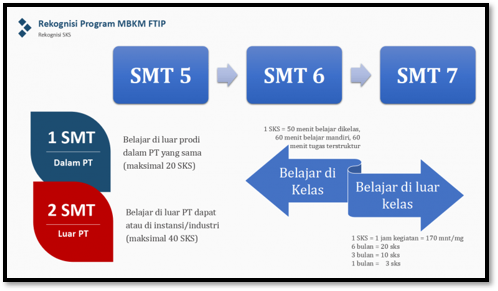
In accordance with Ministry of Education and Culture Regulation Number 3 of 2020 regarding the implementation of the Merdeka Belajar Kampus Merdeka (MBKM) Program, the Agricultural Engineering Study Program is also committed to providing students with the right to study outside their study program. As explained in Ministry of Education and Culture Regulation Number 3 of 2020, Article 18, learning activities outside the study program that students can undertake include: internships or work practices, village projects, student exchanges, research, entrepreneurship, independent studies, humanitarian projects, and teaching in schools.

In its implementation, students of the Agricultural Engineering Study Program at Universitas Padjadjaran can voluntarily undertake learning outside the study program at Unpad for 1 (one) semester or equivalent to 20 (twenty) SKS; and for a maximum of 2 (two) semesters or equivalent to 40 (forty) SKS, undertake learning in the same study program at a different university or in a different study program at a different university; and/or learning outside the university.

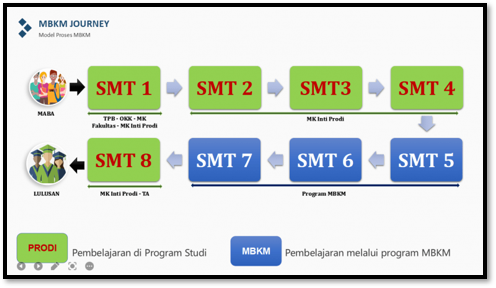
The Agricultural Engineering Study Program at Universitas Padjadjaran implements the MBKM Program in Semesters 5, 6, and 7, as shown in the following Figure:
Forms and Learning Methods in the Agricultural Engineering Study Program

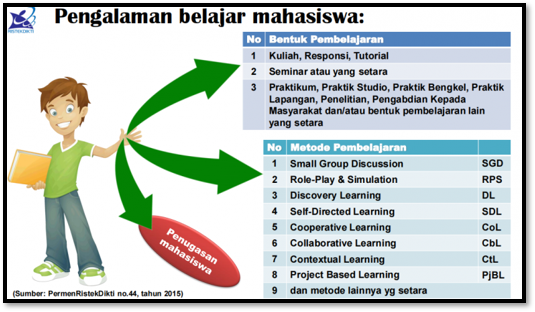
The learning pattern in the Agricultural Engineering Study Program (TEP) refers to the adult education (Andragogy) model, which is expected to enable students to develop abilities, skills, enrich their knowledge, and enhance their technical or professional qualifications in an effort to achieve dual capabilities: on one hand, being able to develop themselves holistically, and on the other hand, being able to participate freely, balanced, and sustainably in socio-cultural, economic, and technological developments. The forms of learning available in the TEP Study Program at Unpad include lectures, response/tutorials, practical work and field lectures, as well as final project seminars integrated into the Thesis and Scientific Publication courses. Meanwhile, the learning methods implemented include Small Group Discussion, Discovery Learning, Cooperative Learning, Project-Based Learning, Problem-Based Learning, Simulation, and Case Study.