



The FTIP Unpad Doctoral Program in Agroindustrial Technology is a doctoral-level education program that focuses on the development of agricultural and agroindustrial technology that is environmentally friendly, value-added, and applicable to society. The Doctoral Program in Agroindustrial Technology produces excellent graduates in the development of environmentally friendly industry-oriented agricultural technology and generates technology that can be applied in society.
The FTIP Unpad Doctoral Program in Agroindustrial Technology is a doctoral program developed to address the need for strengthening research, innovation, and scientific development in the field of agroindustrial technology. Historically, FTIP Unpad was established on September 13, 2005, and has continuously developed study programs from undergraduate, master’s, to doctoral levels; the Doctoral Program in Agroindustrial Technology was established in 2019 as part of strengthening FTIP’s postgraduate education.
This program covers interdisciplinary study materials, including Agricultural Engineering and Biosystems, Food Science and Technology, and Agricultural Industrial Technology. In the DTA FTIP, the field of Agricultural Engineering and Biosystems covers agricultural tools and machinery, soil and water engineering, post-harvest and process technology, agricultural mechanization systems and management, and sustainable agricultural resources. The field of Food Science and Technology covers food product processing technology, food processing engineering, food chemistry, food microbiology, and sustainable food technology. Meanwhile, the field of Agricultural Industrial Technology covers agroindustrial systems, agroindustrial management, agroindustrial process technology, agroindustrial bioprocess technology, and sustainable agriculture.
To become a study program in Agroindustrial Technology capable of competing at national and regional levels by 2024.
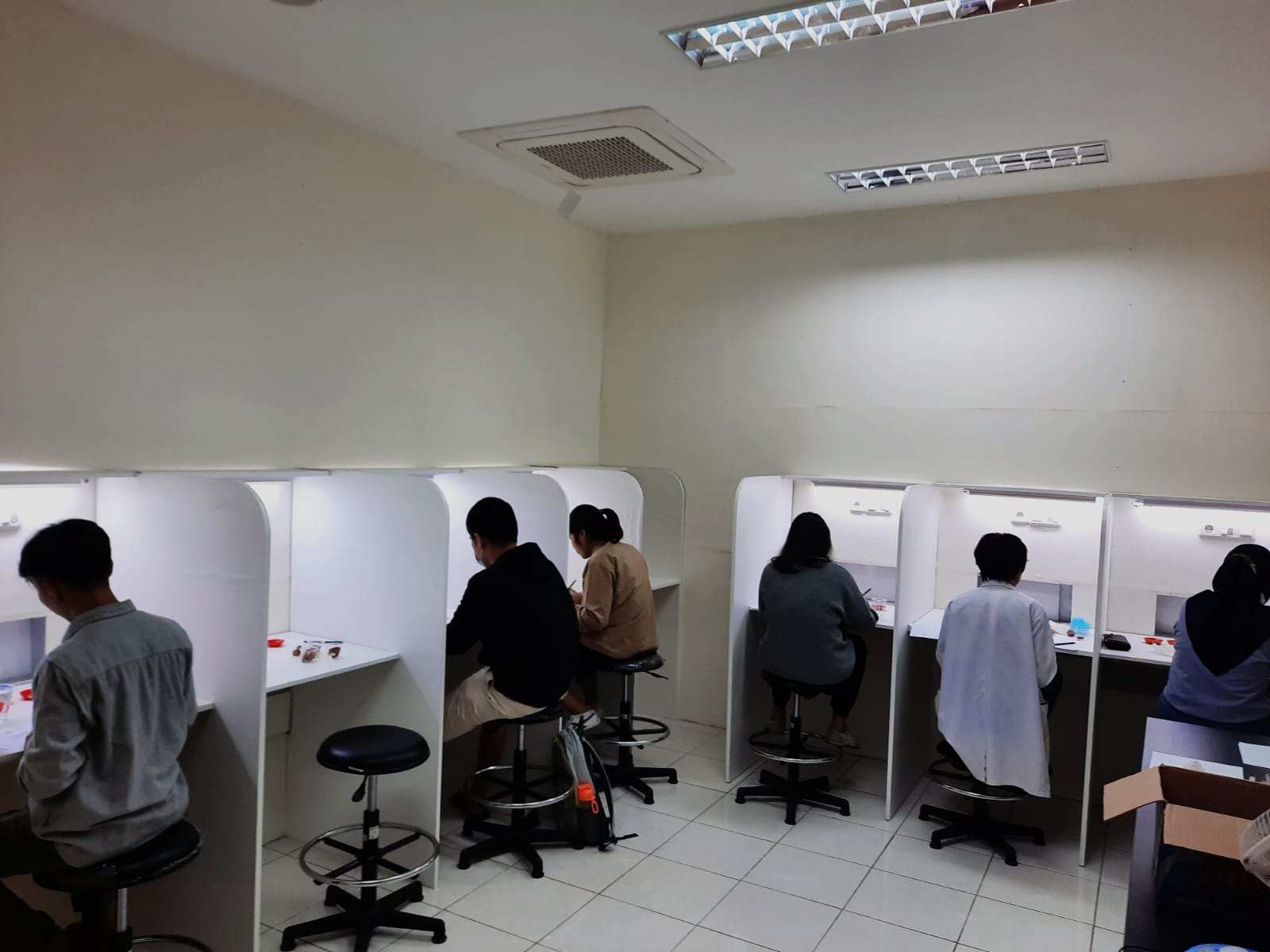
The facilities for the Doctoral Program in Agroindustrial Technology are supported by academic infrastructure, laboratories, seminar rooms, a library, a computer laboratory, and research facilities within the FTIP Unpad Jatinangor Campus. These facilities are crucial because doctoral learning is oriented towards research, dissertation writing, publication in reputable international journals, scientific seminars, and the development of agroindustrial technology innovation. The DTA Infrastructure page notes that FTIP Unpad has 4 main buildings, lecture and seminar rooms equipped with air conditioning and multimedia, 14 laboratories and 1 computer laboratory, a library, and other supporting facilities for academic and student activities.
The curriculum for the Doctoral Program in Agroindustrial Technology is designed as a research-based doctoral curriculum that emphasizes mastery of doctoral qualification competencies, preparation of research proposals, research implementation, publication of reputable international scientific articles, dissertation manuscript review, and doctoral promotion examinations. The cumulative study load for the Doctoral Program in Agroindustrial Technology is at least 42 credits, with main components consisting of 12 credits for Doctoral Qualification Competencies, 5 credits for Research Proposal Seminar, 5 credits for Research Outcome Seminar, 6 credits for Dissertation Manuscript Review, 9 credits for Publication of Scientific Articles in Reputable International Journals, and 5 credits for Doctoral Promotion Examination.
This doctoral learning structure encourages students to build a strong research foundation from the beginning of their studies, develop viable research proposals, generate scientific findings, publish articles in reputable international journals, and defend their dissertations in Doctoral Promotion Examinations. The maximum study period for doctoral education is 7 years or 14 semesters without extension, while the DTA curriculum structure is arranged over six semesters with a distribution of study loads of 12 credits, 5 credits, 9 credits, 5 credits, 6 credits, and 5 credits.
Doctoral Qualification Competency Components
| Competency Cluster | Activity Description |
| Research Skills | Basic courses according to dissertation topic, philosophy or scientific ethics, methodology and scientific writing, research proposal writing, literature review. |
| Knowledge Dissemination / Development Skills | Dissemination training, speaker/presenter at internal seminars, national conferences, international conferences, summer schools relevant to research. |
| Career Development Skills | Teaching method training, lecture assistance, tutorials, public lectures/guest lectures, entrepreneurship training, and research assistant. |
Graduates of the Doctoral Program in Agroindustrial Technology are prepared as doctors capable of developing scientific knowledge, solving complex problems, and conducting research in the field of agroindustrial technology through interdisciplinary, multidisciplinary, and transdisciplinary approaches. The excellence of these doctoral graduates lies in their ability to produce creative, original, tested, and relevant scientific works for the needs of agricultural industrial technology development.
The appeal of graduates from the Doctoral Program in Agroindustrial Technology lies in their ability to lead and manage research independently or in teams, and to make recognized contributions at national, regional, and international levels. With its scope covering Agricultural Engineering and Biosystems, Food Science and Technology, and Agricultural Industrial Technology, graduates have opportunities to serve as academics, researchers, research leaders, expert consultants, innovation developers, and strategic decision-makers in the sustainable agroindustrial sector.
Student life in the Doctoral Program in Agroindustrial Technology is an advanced academic development space focused on dissertation research, international publications, scientific seminars, collaboration with supervisors, and doctoral promotion examinations. Doctoral student activities are not only centered on lectures but also on the production of new knowledge, scientific validation, and tangible contributions to the development of agroindustrial technology.
Achievements of doctoral students, such as Siti Nurmilah, a student of the Doctoral Program in Agroindustrial Technology, who earned a doctorate with Cum Laude honors after defending her dissertation on aglycone isoflavones as anti-aging agents through metabolomic and metagenomic studies on tempeh; this research resulted in seven publications in reputable Q1 international journals.
The FTIP Unpad Doctoral Program in Agroindustrial Technology is a strategic choice for prospective students who wish to pursue doctoral education based on research, innovation, and scientific development in the field of agroindustrial technology. This program is suitable for academics, researchers, lecturers, industry practitioners, consultants, bureaucrats, technology developers, and professionals who want to strengthen their expertise in agricultural technology, food technology, process technology, bioprocesses, agroindustrial systems, and sustainable agriculture.
The excellence of this program lies in its broad and integrative scope of study materials, namely Agricultural Engineering and Biosystems, Food Science and Technology, and Agricultural Industrial Technology. With a doctoral curriculum structure based on dissertations and reputable international publications, students are guided not only to complete their studies but also to produce scientific contributions that can be recognized and utilized more widely by the academic community, industry, government, and society.
Prospective students who wish to develop careers as academics, researchers, research leaders, agroindustrial innovators, or strategic decision-makers in the field of agroindustrial technology can choose the FTIP Unpad Doctoral Program in Agroindustrial Technology for their advanced education. They can visit the official SMUP website for the new student registration process.