



The establishment of the Food Technology Study Program is inseparable from the dynamics of the Faculty of Agricultural Industrial Technology (FTIP). FTIP was inaugurated on September 13, 2005, based on the Decree of the Rector of Universitas Padjadjaran number 1520/J06/Kep/Kp/2005. FTIP was born from the upgrading of the Department of Agricultural Technology (TEKNOTAN) of the Faculty of Agriculture, Universitas Padjadjaran, located at the Jatinangor campus of Universitas Padjadjaran.
Prior to 1983, the Faculty of Agriculture housed the Department of Agricultural Product Technology and the Department of Agricultural Mechanization, which were subsequently merged into the Department of TEKNOTAN through the Decree (SK) of the Director General of Higher Education number 134/Dikti/Kep/1984, making it one of the six departments within the Faculty of Agriculture at Universitas Padjadjaran. The TEKNOTAN Department consisted of three Study Programs: (i) Agricultural Product Technology Study Program; (ii) Agricultural Tools and Machinery Study Program; and (iii) Soil and Water Engineering Study Program. In 1985, the Faculty of Agriculture relocated from the Universitas Padjadjaran campus in Bukit Dago (North Bandung) to the Jatinangor campus in Sumedang Regency, West Java. On July 11, 1996, through the Decree of the Minister of Education and Culture Number: 217/DIKTI/Kep/1996, the Agricultural Product Technology study program became the Food Technology Study Program, while the Agricultural Tools and Machinery Study Program and the Soil and Water Engineering Study Program were merged into the Agricultural Engineering Study Program.
Prior to 1983, the Faculty of Agriculture housed the Department of Agricultural Product Technology and the Department of Agricultural Mechanization, which were subsequently merged into the Department of TEKNOTAN through the Decree (SK) of the Director General of Higher Education number 134/Dikti/Kep/1984, making it one of the six departments within the Faculty of Agriculture at Universitas Padjadjaran. The TEKNOTAN Department consisted of three Study Programs: (i) Agricultural Product Technology Study Program; (ii) Agricultural Tools and Machinery Study Program; and (iii) Soil and Water Engineering Study Program. In 1985, the Faculty of Agriculture relocated from the Universitas Padjadjaran campus in Bukit Dago (North Bandung) to the Jatinangor campus in Sumedang Regency, West Java. On July 11, 1996, through the Decree of the Minister of Education and Culture Number: 217/DIKTI/Kep/1996, the Agricultural Product Technology study program became the Food Technology Study Program, while the Agricultural Tools and Machinery Study Program and the Soil and Water Engineering Study Program were merged into the Agricultural Engineering Study Program.
Until 2008, Universitas Padjadjaran operated as a State University with a centralized (state) financial management system. Since 2008, through the Decree of the Minister of Finance No. 260/ICMK.05/2008 dated September 15, 2008, the financial management of Universitas Padjadjaran has followed the Public Service Agency (BLU) system. This change in the financial governance system was followed by changes in the Organization and Work Procedures of Universitas Padjadjaran based on the Regulation of the Minister of Education and Culture No. 46 of 2013 dated April 11, 2013, which was subsequently followed by the Regulation of the Rector of Universitas Padjadjaran No. 1 of 2014 concerning the Management of Education at Universitas Padjadjaran.
Through Government Regulation No. 80 of 2014 dated October 17, 2014, Universitas Padjadjaran was designated as a Legal Entity State University (PTNBH), followed by the Regulation of the Rector of Universitas Padjadjaran No. 70 of 2015 dated September 11, 2015, concerning the Organization and Work Procedures of the Management of Universitas Padjadjaran.
Based on the Decree (SK) of BAN-PT Number: 2728/SK/BAN-PT/Akred/S/XI/2016, the Food Technology Study Program obtained an “A” Accreditation. Since August 1, 2009, FTIP has held ISO 9001:2008 certification with certificate number ID09/1367 in “Education Services including Design curriculum & Lecture material, Teaching and Learning”, as the first faculty at Universitas Padjadjaran to do so.
By 2026, the Food Technology Study Program aims to become a center for science and technology studies in the food industry that is competitive and competent at the international level.
The Food Technology Study Program is supported by learning and laboratory facilities to support lectures, practicums, research, and student competency development. Available facilities include classrooms, seminar and meeting rooms, projector equipment, practicum and research laboratories, a library, e-learning rooms, and internet access.
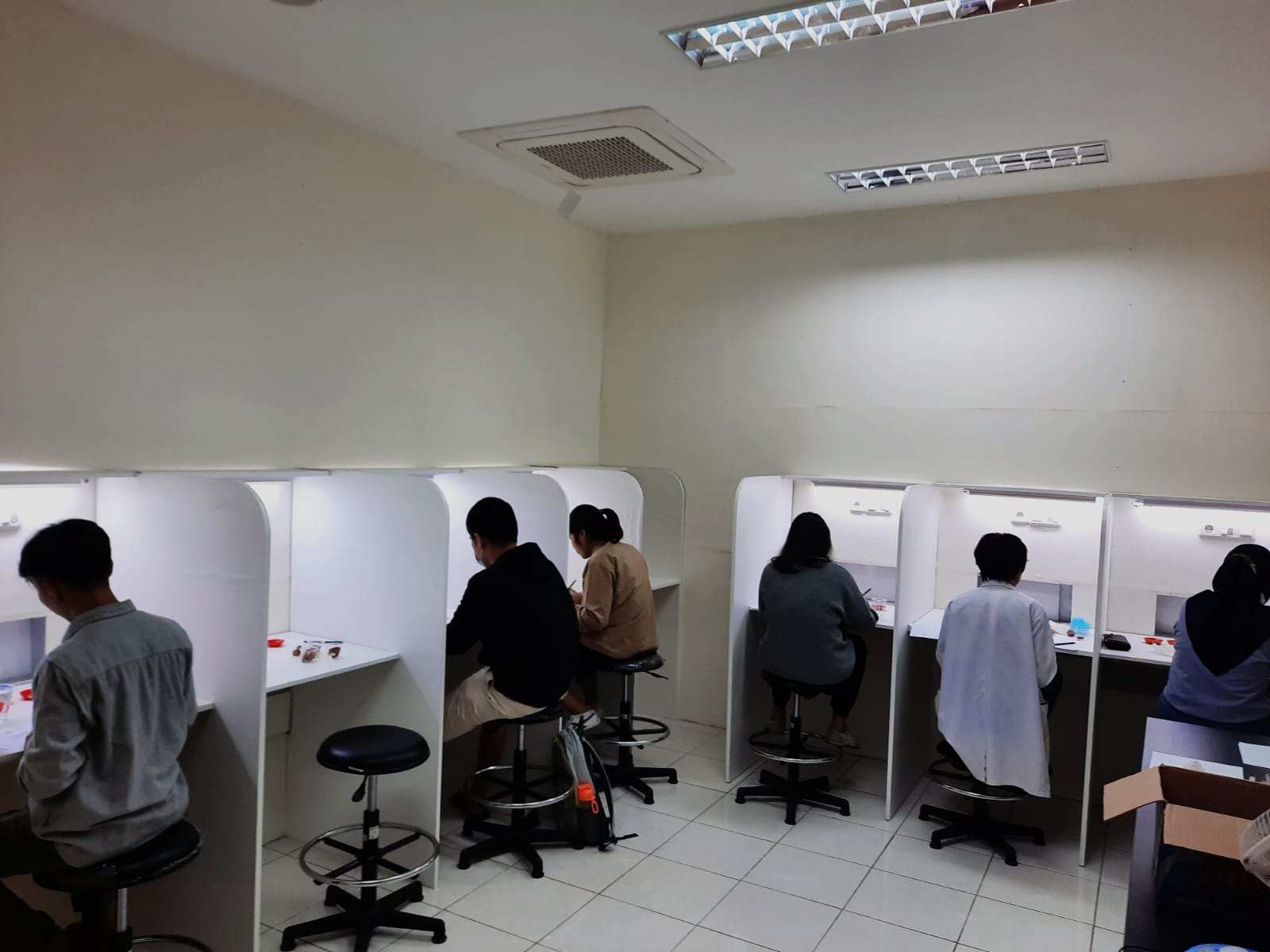
The curriculum of the Food Technology Study Program is designed to equip students with the fundamentals of food science, processing technology, microbiology, food chemistry, food safety, processing engineering, product development, entrepreneurship, field work practice, and thesis preparation. On the learning page, the total study load that students must complete is 145 credits (SKS).
Some popular elective courses:
The Food Technology Study Program at FTIP Unpad prepares graduates who have the ability to master, apply, and develop food science and technology to produce food products that are safe, nutritious, high-quality, innovative, and in accordance with the needs of society and the food industry. Graduates of the Food Technology Study Program possess a religious attitude, uphold human values, contribute to social, national, and state life, and have responsibility, discipline, social concern, environmental awareness, and an entrepreneurial spirit. Graduates are also able to work together, respect diversity, and internalize the values of independence and perseverance in carrying out their profession in the field of food technology. Furthermore, graduates possess managerial skills, oral and written communication skills, critical thinking, independent responsibility, teamwork, organizational skills, leadership, the ability to utilize information sources, and uphold professionalism and work ethics. Additionally, graduates are able to identify, analyze, and formulate solutions to problems in the field of food technology using a scientific approach with integrity, and are capable of developing food businesses independently or in teams.
Food Technology Student Affairs serves as a space for developing student capacity outside the classroom through organizations, leadership, academic activities, entrepreneurship, social community service, external relations, as well as media and information. Through HIMATIPAN, students can develop soft skills, networking, social awareness, and professional identity in the field of food technology.
There are several departments within the Himatipan organization, namely:
The Bachelor of Food Technology Study Program at FTIP Unpad is the right choice for prospective students who wish to contribute to the development of future food. This study program excels in the development of local commodity-based food flours and innovative traditional foods, supported by fields of study in Food Processing Technology, Food Processing Engineering, Food Chemistry, and Food Microbiology. With an “Excellent” (Unggul) Accreditation status, the Food Technology Study Program at FTIP Unpad provides a strong academic environment to shape graduates who understand the quality, safety, innovation, and added value of food products.
Through directed learning, students are equipped with the ability to develop food products that are safe, high-quality, nutritious, innovative, and relevant to the needs of society and the food industry. Food Technology graduates have broad career opportunities, ranging from the food industry, product research and development, quality control, food safety, food entrepreneurship, and government agencies, to local food development. If you are interested in building the future through food innovation, the Bachelor of Food Technology Study Program at FTIP Unpad can be a strategic first step. New student registration can be done through the official SMUP website.